~70%
of T2D risk is attributable to heritable factors.¹

Combines in genetic insights from whole-genome sequencing with clinical inputs from an individual's health history, to deliver a more comprehensive and personalized assessment of type 2 diabetes (T2D) risk.
of T2D risk is attributable to heritable factors.¹
American adults have prediabetes — and most are undiagnosed.²
reduction in T2D incidence when adults at high risk for T2D adopted intensive lifestyle intervention, highlighting the power of proactive recommendations.³
1. Bonnefond A, Florez JC, et al. Monogenic and polygenic contributions to type 2 diabetes. Lancet Diabetes Endocrinol. 2025. 2. Centers for Disease Control and Prevention. National Diabetes Statistics Report. 3. Diabetes Prevention Program Research Group. Reduction in the incidence of type 2 diabetes with lifestyle intervention or metformin. N Engl J Med. 2002;346:393–403.
Genetic analysis of approximately 1.3 million markers is integrated with the clinical risk factors below to produce a personalized absolute risk estimate.
Adults aged 35–70 with no personal history of type 2 diabetes who are not using insulin or oral antidiabetic medication.
From samples received, most results are delivered in 5 to 6 weeks. Follow-up testing or re-requisitions for existing MyOme patients are typically completed in under 2 weeks, often within a few days.
Turnaround times are estimates and begin once samples are processed at MyOme. They may be extended in cases outside MyOme's control, including delays related to confirmation testing or other unforeseen circumstances.
When ordering this test, providers select the test type (Atlas Cardiometabolic Plus or Atlas Cardiometabolic Select), then choose Type 2 Diabetes Integrated Risk™.
Uses 30X whole-genome sequencing.
Uses blended high-coverage exome and low-coverage genome sequencing.
Increased risk results can inform proactive recommendations aligned with clinical guidelines, such as healthy lifestyle habits, anti-diabetic medication, and regular glucose checks.
Intensive lifestyle intervention and metformin both reduce progression to diabetes in high-risk adults — the score identifies who to prioritize. Providers should weigh personal and family history alongside the score.
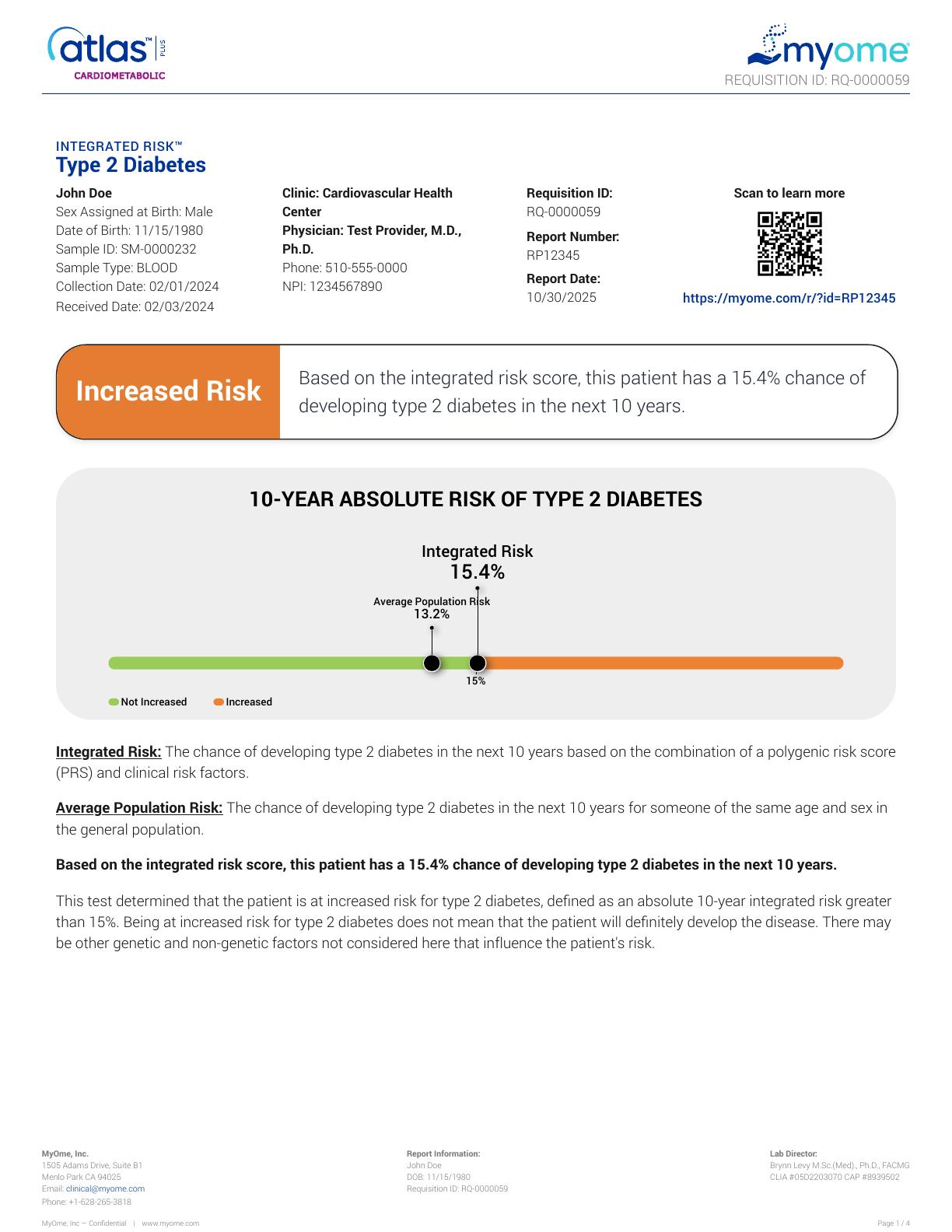
Representative report page — not an actual patient result.
This test is a screening tool, not a diagnostic test.
This test does not detect high-risk variants linked to monogenic conditions (e.g., MODY).
The Integrated Risk test is intended as a screening tool — some people with a high risk score will not develop type 2 diabetes and some with a low risk score will.
We're here at every step — from ordering and sample collection to interpreting results with your patients.