Up to 20%
of breast cancers have an underlying genetic risk that cannot be detected by single-gene analysis (e.g., BRCA1 / BRCA2).³

Combines genetic and clinical factors to calculate personalized, absolute 5-year and remaining lifetime risk of developing breast cancer — for individuals who do not have single gene-driven hereditary breast cancer risk.
of breast cancers have an underlying genetic risk that cannot be detected by single-gene analysis (e.g., BRCA1 / BRCA2).³
of women* do not have a single-gene breast cancer condition but may have genetic risk factors detectable by this test.¹
of women* classified as low-risk by a standard risk tool were reclassified as high-risk by Integrated Risk — increasing change of eligibility for preventive recommendations.
1. Garber JE, Offit K. Hereditary Cancer Predisposition Syndromes. J Clin Oncol. 2005;23:276–292. 2. Tshiaba P, et al. Integration of a Cross-Ancestry Polygenic Model With Clinical Risk Factors Improves Breast Cancer Risk Stratification. JCO Precis Oncol. 2023;7:e2200447. 3. Wendt C, Margolin S. Acta Oncologica. 2019;58(2):135–146. *MyOme recognizes and respects the diversity of gender identities. For the purposes of this webpage, "women" refers to individuals assigned female at birth.
Genetic analysis covers more than one million markers, integrated with the following clinical risk factors.
*Based on those inputs included in the Tyrer-Cuzick clinical model
Individuals assigned female at birth, aged 18–84. Individuals with a confirmed pathogenic variant in a breast cancer predisposition gene, or with a personal history of breast cancer, are not eligible.
From samples received, most results are delivered in 5 to 6 weeks. Follow-up testing or re-requisitions for existing MyOme patients are typically completed in under 2 weeks, often within a few days.
Turnaround times are estimates and begin once samples are processed at MyOme. They may be extended in cases outside MyOme's control, including delays related to confirmation testing or other unforeseen circumstances.
When ordering this test, providers select the test type (Atlas Cancer Plus or Atlas Cancer Select), then choose Breast Cancer Integrated Risk™.
Uses 30X whole-genome sequencing.
Uses blended high-coverage exome and low-coverage genome sequencing.
Guidelines recommend additional risk reduction strategies for individuals at increased risk to develop breast cancer. Those with a >20% lifetime risk should consider an annual breast MRI alongside mammography.¹
Those with a >1.7% 5-year risk should consider endocrine risk-reducing medications based on age and menopause status.² Providers should consider a patient’s personal and family history when determining the appropriate screening and prevention strategies.
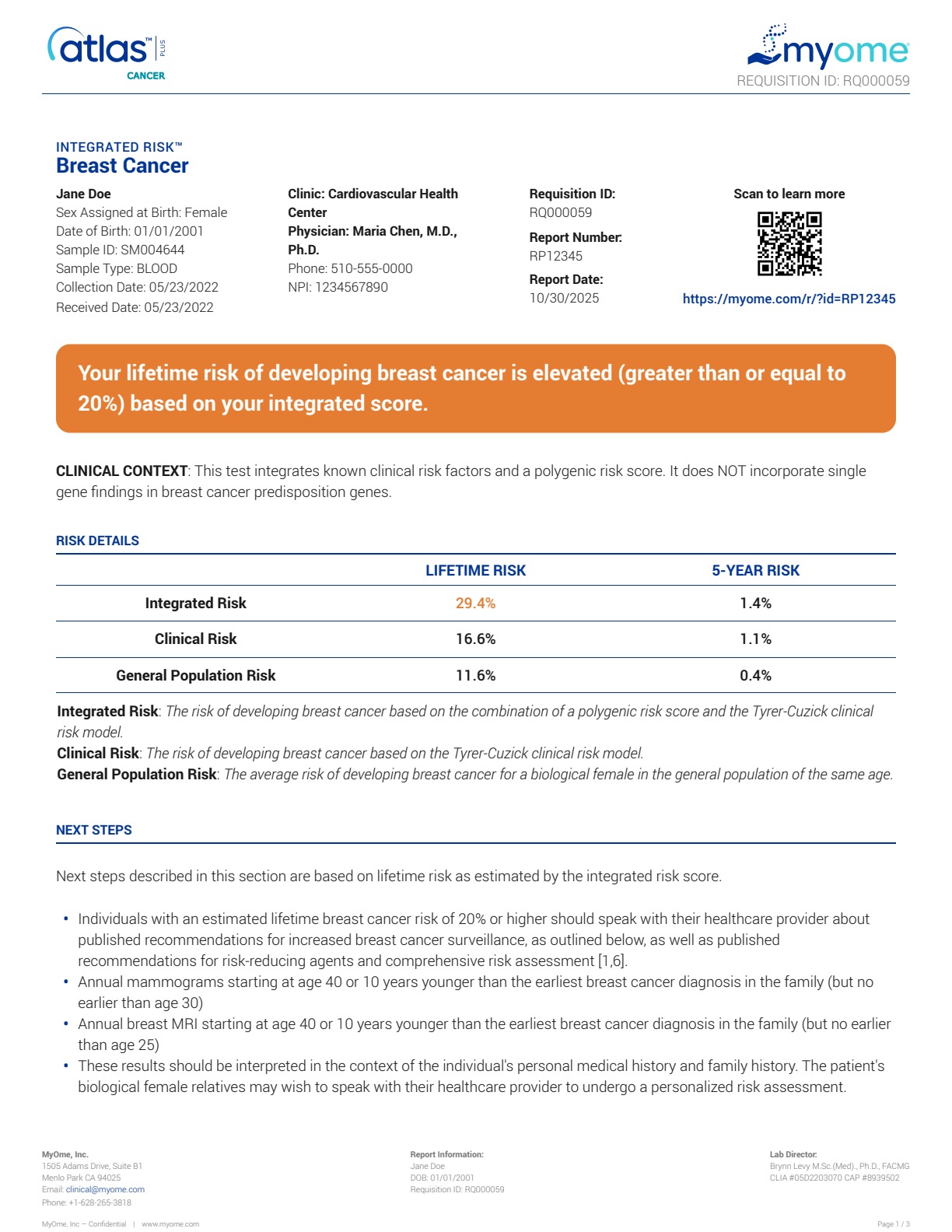
Representative report page — not an actual patient result.
This test is a screening tool, not a diagnostic test.
This test does not detect high-risk variants linked to monogenic conditions.
The Integrated Risk test is intended as a screening tool — some people with a high risk score will not develop breast cancer and some with a low risk score will.
We're here at every step — from ordering and sample collection to interpreting results with your patients.