~50%
of CAD risk is due to heritable factors, many of which can be detected as genetic markers by this test.¹

Combines genetic, clinical, and lifestyle factors to calculate a personalized, absolute 10-year risk score of experiencing a CAD-related event.
of CAD risk is due to heritable factors, many of which can be detected as genetic markers by this test.¹
of cardiac events happen in individuals without standard clinical factors.²
of patients classified below high-risk by a standard CAD risk calculator* were upgraded to high-risk by MyOme testing.³
1. McPherson R, Tybjaerg-Hansen A. Genetics of CAD. Circulation Research. 2016;118(4). 2. Mazhar J, Figtree G, Vernon ST, et al. Am J Prev Cardiol. 2020;4:100116. 3. Ratman D, Tshiaba P, Levin M, et al. npj Cardiovasc Health. 2025;2:13. *Standard CAD risk calculator refers to the ASCVD pooled cohort equation (PCE) tool.
Genetic analysis is integrated with the clinical risk factors below to produce an absolute 10-year and remaining lifetime risk estimate.
1. Khera, Amit V., et al. "Genome-wide polygenic scores for common diseases identify individuals with risk equivalent to monogenic mutations." Nature Genetics 50.9 (2018): 1219–1224.
*Clinical risk factors are based on those included in the ASCVD pooled cohort equation (PCE).
Adults aged 40–79 with no personal history of CAD who have all the clinical factors required to calculate risk, as defined by the ASCVD pooled cohort equation (PCE) tool.
From samples received, most results are delivered in 5 to 6 weeks. Follow-up testing or re-requisitions for existing MyOme patients are typically completed in under 2 weeks, often within a few days.
Turnaround times are estimates and begin once samples are processed at MyOme. They may be extended in cases outside MyOme's control, including delays related to confirmation testing or other unforeseen circumstances.
When ordering this test, providers select the test type (Atlas Cardiometabolic Plus or Atlas Cardiometabolic Select), then choose Coronary Artery Disease Integrated Risk™.
Uses 30X whole-genome sequencing.
Uses blended high-coverage exome and low-coverage genome sequencing.
Elevated risk results can inform proactive recommendations aligned with clinical guidelines, such as cholesterol-lowering treatment, further screening, and a heart-healthy lifestyle.
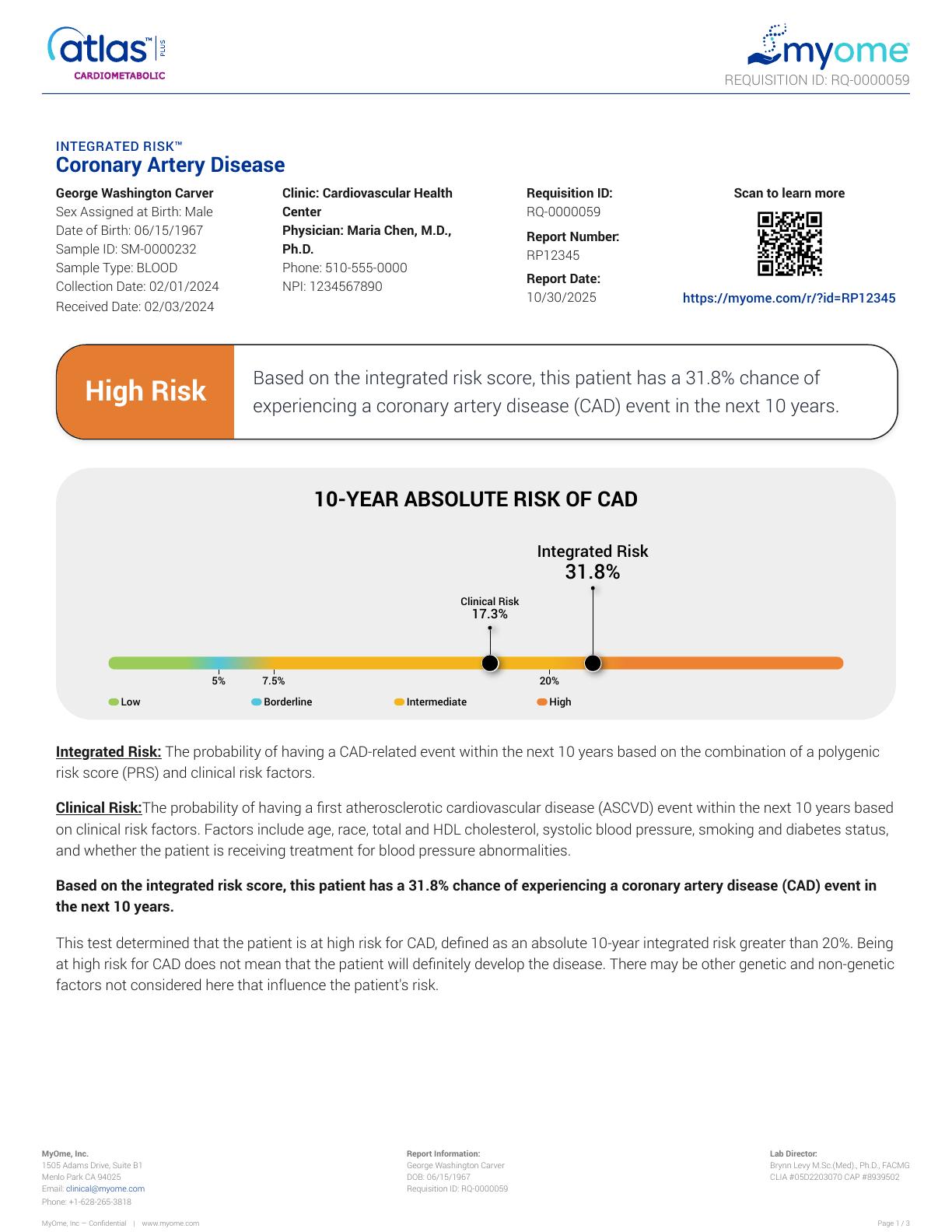
Representative report page — not an actual patient result.
This test is a screening tool, not a diagnostic test.
This test does not detect high-risk variants linked to monogenic conditions (e.g., familial hypercholesterolemia). MyOme Atlas Curated Screen offers risk screening for certain monogenic cardiometabolic conditions.
The Integrated Risk test is intended as a screening tool — some people with a high risk score will not develop CAD and some with a low risk score will.
We're here at every step — from ordering and sample collection to interpreting results with your patients.